Bark and Feather: Approaches to Texture Studies in the Field
Bark and Feather: Approaches to Texture Studies in the Field
Bark and feathers reward careful attention. They are tactile subjects that encourage experimentation with marks, tools, and time. This note presents a few approaches—direct texture sampling, comparative mark pages, and simplified iconography—so you can select or combine methods depending on the location, subject, and available time.
Direct texture sampling: close observation exercises
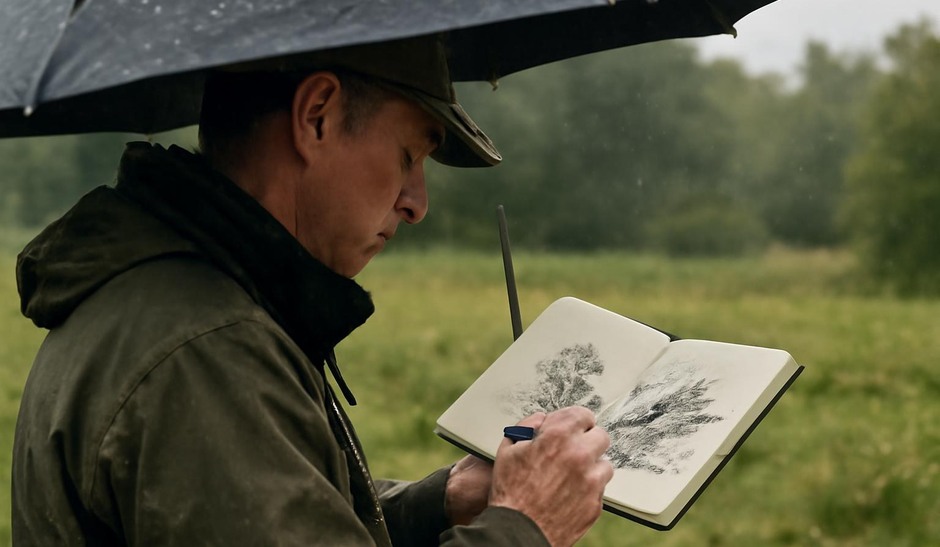
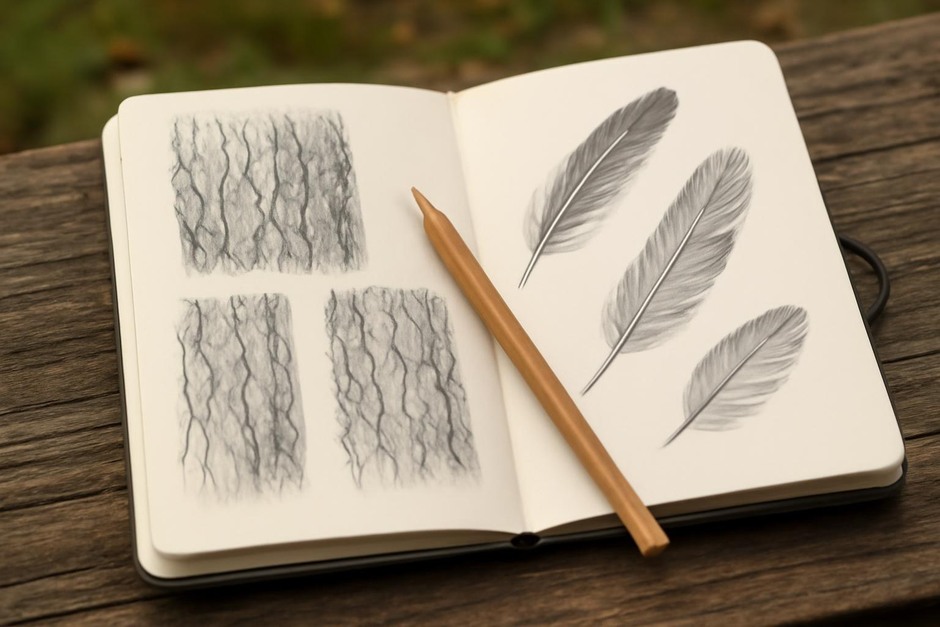
Direct texture sampling means spending ten to twenty minutes focusing on one small area and rendering it at a larger scale than life. For bark, choose a patch about an inch or two across and translate its ridges, fissures, and lichens into a close-up study. For feathers, render a single vane, tracking the curve and barbs.
Tools: a soft graphite or a fine nib pen provides control for small marks. Use deliberate, observational strokes rather than symbolic shorthand. This method surfaces details you might otherwise miss and trains your hand to follow subtle rhythms.
Comparative mark pages: many ways to say ‘rough’ or ‘soft’
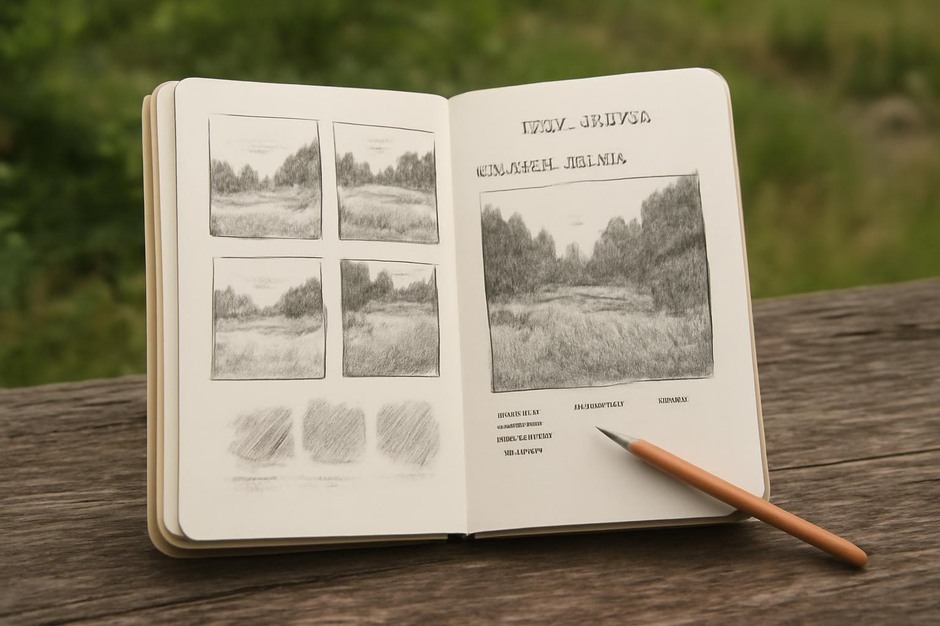
Create a page with columns labeled for different materials or mark types: cross-hatching, stipple, horizontal strokes, lifted wash, dry-brush. Spend two minutes per cell making the texture with both the material you intend to use in the final work and a contrasting material. For example, make bark marks with both pen and a dry brush. This comparison clarifies which marks best suggest roughness, flexibility, or sheen.
Simplified iconography: quick field shorthand
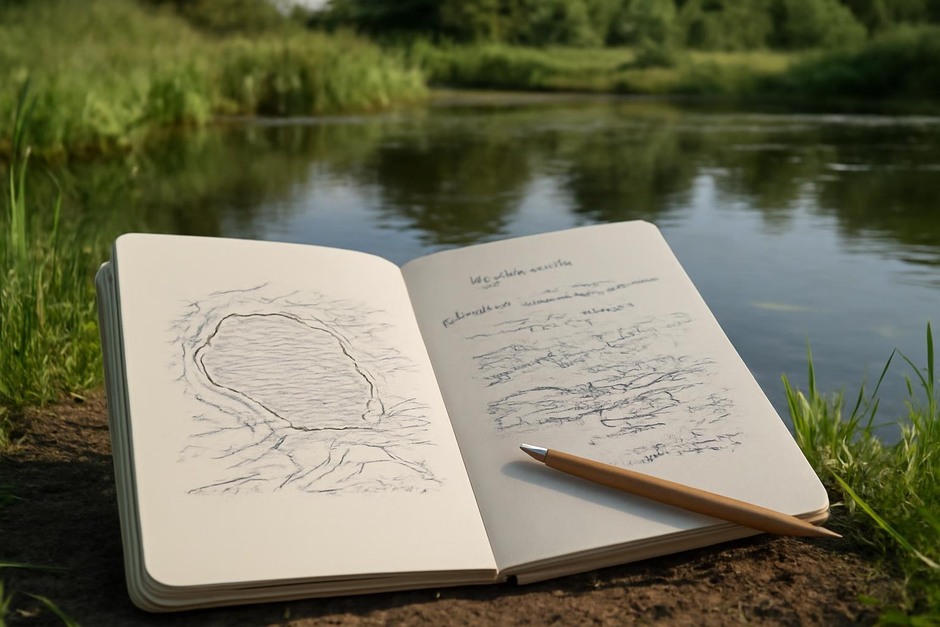
When time is limited, develop a consistent shorthand that captures essential information: a zigzag for deeply furrowed bark, a soft waved line for downy feathers. Pair these icons with small tonal blobs to indicate relative darkness. Iconography is a pragmatic compromise when you must move quickly but still want reliable recall for later studio work.
Combining media for depth
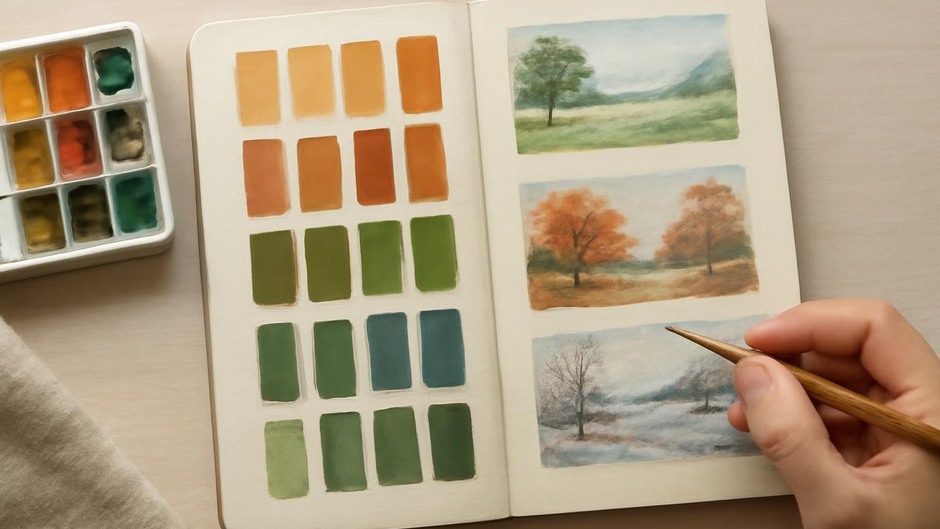
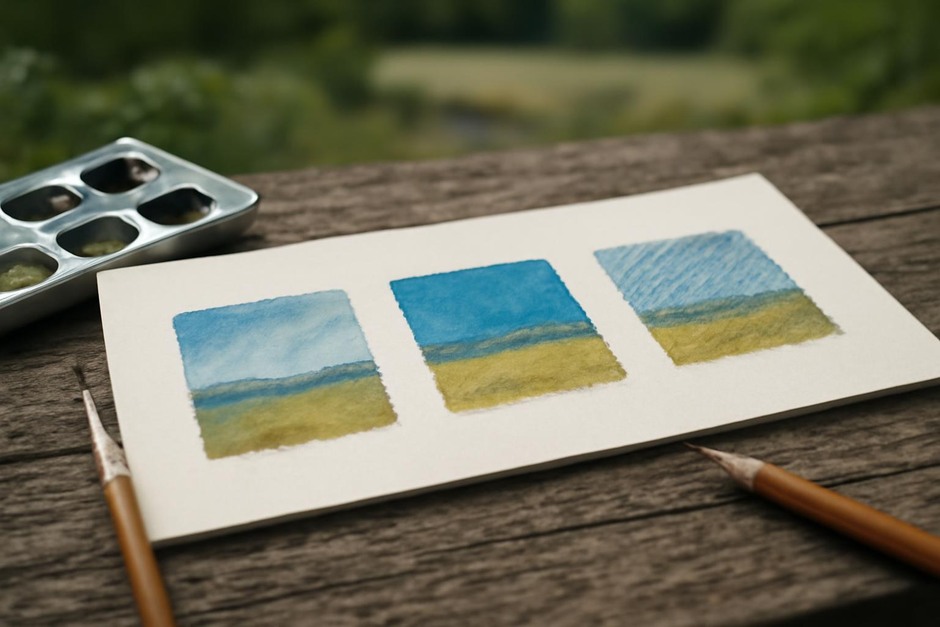
Bark often benefits from a layered approach: pencil for structure, ink for contrast, a dry brush for texture, and a light wash to indicate coloured lichen. Feathers respond differently: a wet-on-wet wash can suggest soft transitions, while a fine pen renders the rachis and barbs crisply. Try mixing wet and dry media on the same page to see which combinations best preserve the subject’s character.
Distance and context: texture within composition
Textures read differently at various viewing distances. A highly detailed bark study can overwhelm if placed inside a distant landscape; conversely, a distant texture suggested with a few marks may read more convincingly than overworked detail. Practice making the same texture at three scales: a 1:1 close-up, a mid-range patch, and a distant shorthand. Comparing these scales helps integrate texture into a composition without competing with other elements.
Exercises to try
- Choose a single tree and make a 10-minute close-up bark study, a 5-minute comparative mark page, and a 2-minute icon sheet for the same tree.
- Observe a bird from a distance and make a small feather study from a shed feather, then perform a quick field sketch using feather icons.
- Repeat the same exercises with different media across three sessions to see which marks persist as most useful.
The point is not to find the one true method but to compile a personal vocabulary of marks and habits you can rely on. Bark and feathers reward both patience and practical shorthand; give yourself permission to be precise sometimes and suggestive at others.