Edge Studies: Observing Transition Zones in Nature Journals
Edge Studies: Observing Transition Zones in Nature Journals
Edges—the borders between meadow and woods, shore and marsh, path and hedge—are rich sites for observation. They gather species, show abrupt changes in light and texture, and offer varied compositional possibilities. This studio-note outlines several strategies for studying edges: thumbnail compositions, sample strips, and microhabitat sketches. Each emphasizes different information you might want to retain.
Thumbnail compositions: testing viewpoints
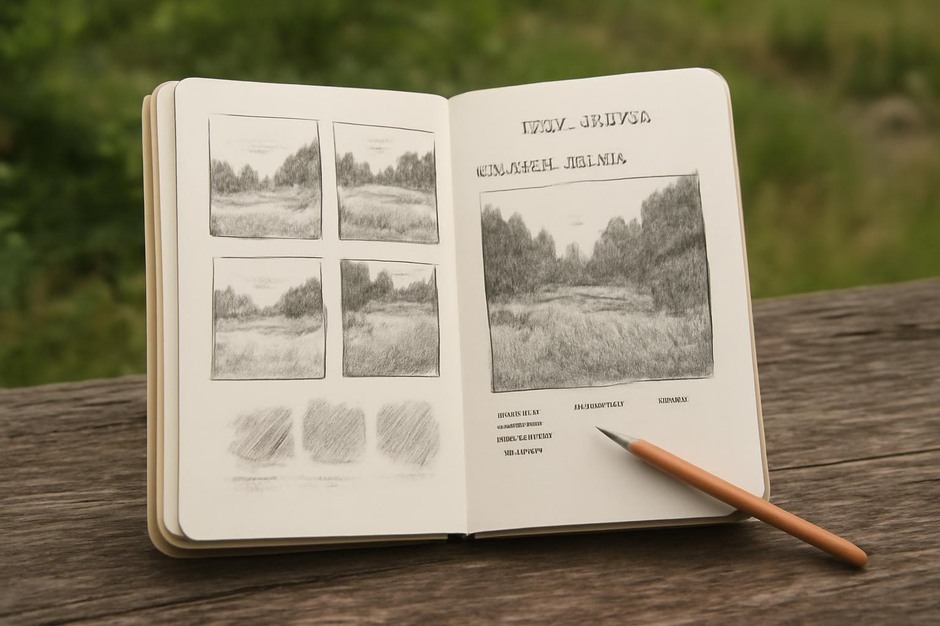
Start with a series of small thumbnails that explore vantage points and framing. Thumbnails are quick tests: vertical versus horizontal, foreground anchor or open ledge, low viewpoint or standing. Try six to eight thumbnails in five minutes to reveal which arrangements best communicate the character of the edge. This practice keeps you from committing to a single composition too soon.
Sample strips: linear records of change
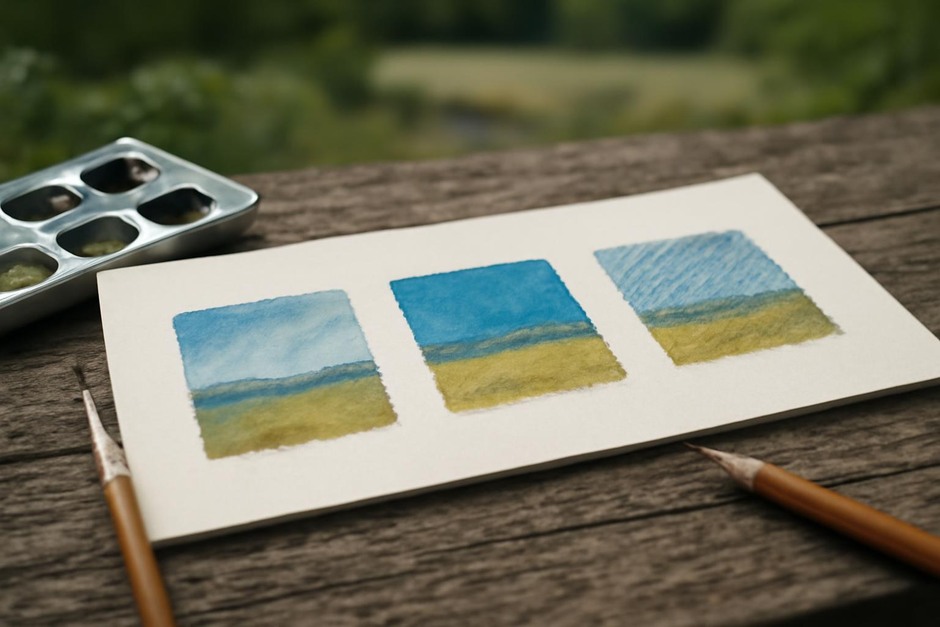
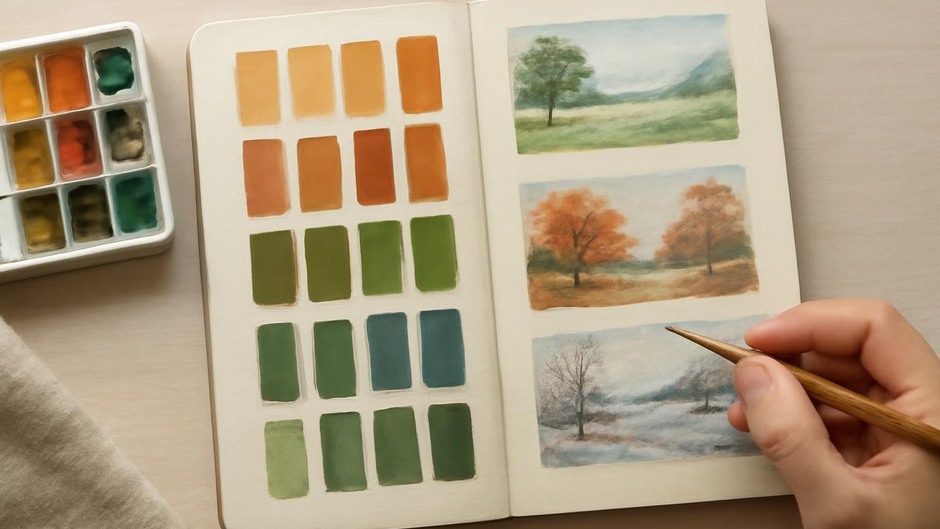
Sample strips are narrow bands across the page where you render a linear cross-section of the edge. Move left to right, noting ground texture, plant height, and dominant colours in strips a centimetre or two high. This method succinctly records the gradient from one habitat to another and is especially useful when you want to catalogue changes along trails or at regular intervals.
Microhabitat sketches: focused detail
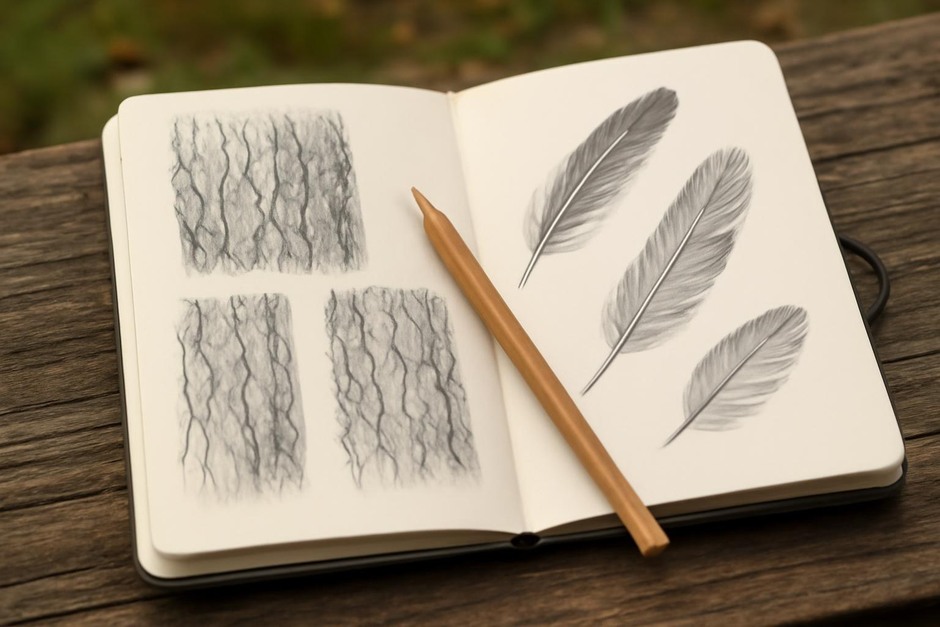
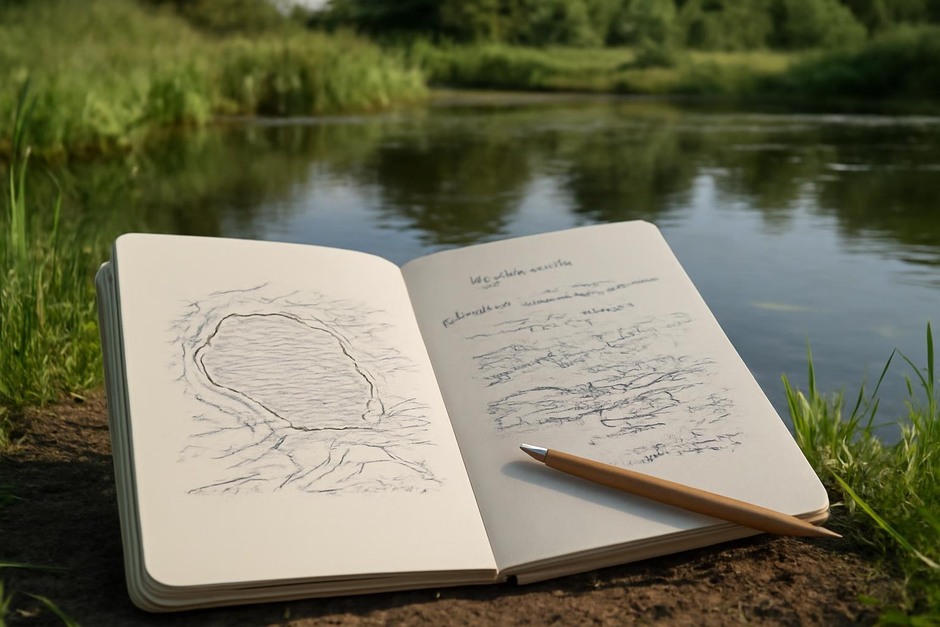
Edges contain niches: the root mat at the tree line, the tussock at a stream bank, a sheltered cavity under a stone. Spend a short focused session on one microhabitat, rendering texture and scale. These studies can later be recombined into a larger composition or used as references for species-specific illustration.
Comparing broad and focused methods
Thumbnail compositions capture the feel and relationship of spaces. Sample strips quantify transitions. Microhabitat sketches reveal texture and species detail. All three can be assembled on the same spread: thumbnails for overall choices, strips for recorded gradients, and microhabitats for the tactile evidence. Combining them gives both context and close-up information.
Using edges for seasonal observation
Edges are also sensitive indicators of seasonal shifts. Early spring may show sudden green at margins; late autumn accentuates woody structure. Repeating the same edge study across months with identical thumbnails or strips highlights phenological change. Choose one fixed viewpoint and return periodically to build a consistent series.
Compositional tips for edge drawings
Consider using the edge itself as a compositional line that leads the eye through the page. Place a strong foreground anchor—fallen log, stone, or a clump of grasses—to ground the composition. Let middle ground elements recede with softer marks or lighter washes. If the edge is complex, reduce details in background zones so the reader’s eye is guided naturally.
Practical tools and scale
Edges are best studied with a medium-range sketchbook 5×8 or 6×9 inches. A small set of watercolours or a few coloured pencils handle the majority of needs. Carry a tape measure or a simple stride-count note to attach scale when useful. Keep a pocket magnifier for tiny flowers or lichens; it helps inform texture marks during microhabitat sketches.
Edges invite repeated attention. They reward both broad compositional thinking and patient micro-observation. By testing thumbnails, recording sample strips, and isolating microhabitats, you build a layered, reliable record of how two habitats meet and how that meeting changes over time.