Layering Media Outdoors: Watercolour, Gouache, and Dry Media Compared
Layering Media Outdoors: Watercolour, Gouache, and Dry Media Compared
Layering is central to translating observation into a convincing page. Outdoors, time and conditions affect how you sequence layers. This note compares three common approaches—transparent watercolour, opaque gouache, and dry media layering—with practical sequencing suggestions and considerations for surface and scale.
Transparent watercolour: build from light to dark
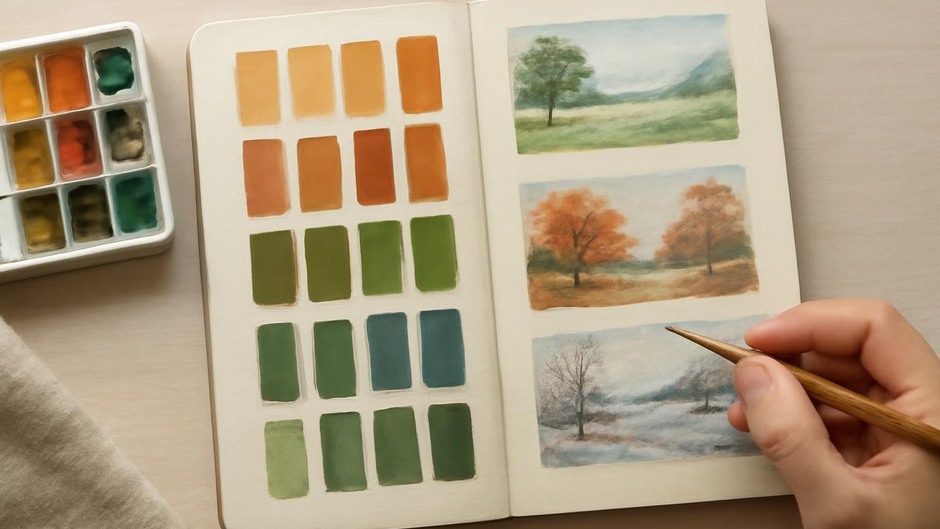
Transparent watercolour favors a top-to-bottom logic: begin with broad light washes to establish atmosphere and large shapes, then build successive darker layers to define form. Because earlier layers remain visible, careful planning of the lightest areas is necessary. Watercolour excels at indicating translucency—wet leaves, distant haze, water surfaces—and is forgiving when you accept serendipitous blooms as part of the record.
Gouache: opaque correction and surface modulation
Gouache allows opaque corrections and offers strong mid-tone control. A common routine outdoors is to lay an underpainting in watercolour or thin gouache, then use thicker gouache to add lighter highlights or to push edges. Gouache can obscure earlier marks, which is useful when you need to simplify a scene quickly. It also responds well to dry-brush techniques for texture, though it may be more visible under scanning if applied thickly.
Dry media: layering tone, texture, and colour
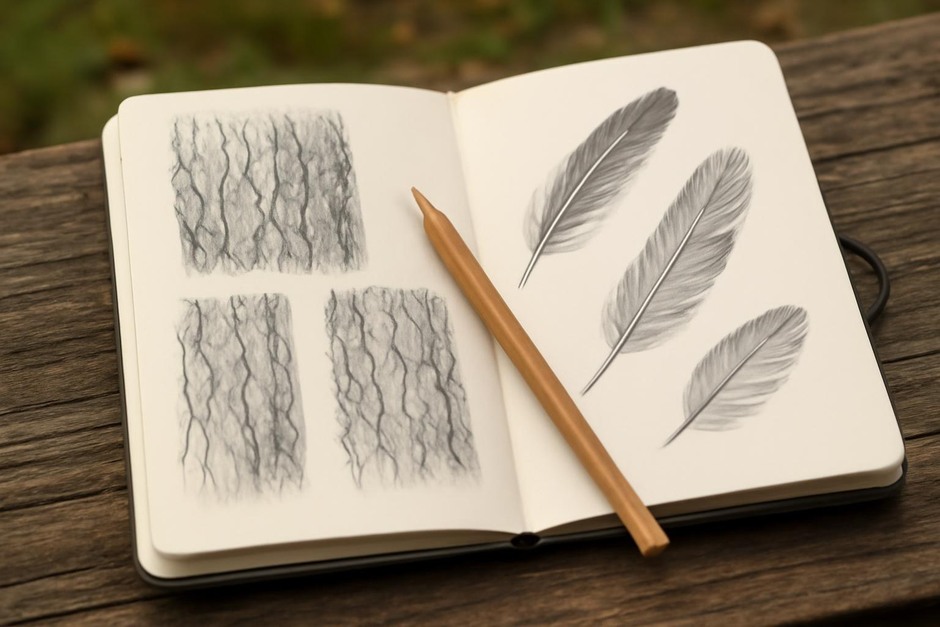
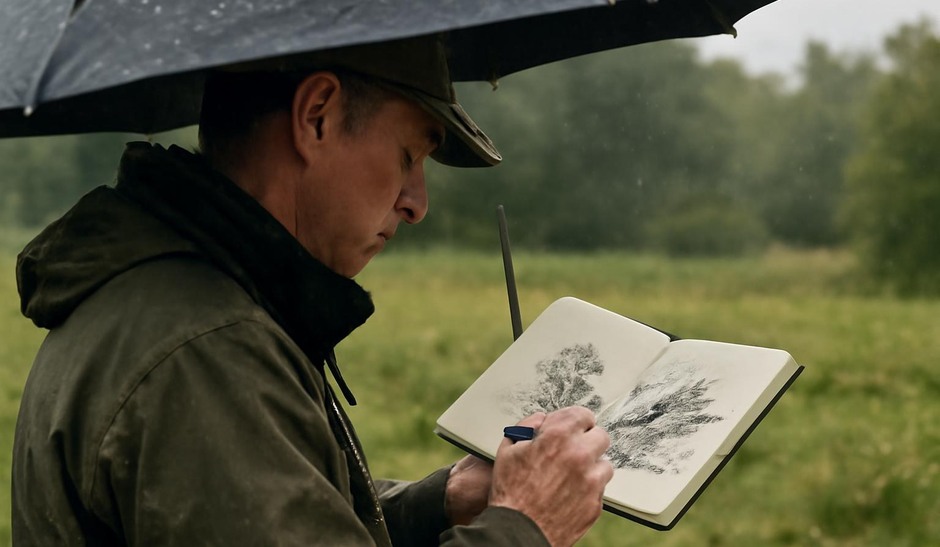
Dry media—coloured pencils, conte, charcoal—layer differently. They build texture and subtle colour via scribble, burnishing, and cross-hatching. Dry media are portable and allow incremental adjustments without waiting for drying. They are excellent for adding fine texture over a wash or for working entirely dry when wet media are impractical. Note that lighter pencil layers may be lost under heavy washes, so sequencing matters.
Mixed sequences: common practical orders
Here are a few sequences to try outdoors:
- Pencil sketch → light watercolour wash → dry media texture → ink linework.
- Loose watercolour underpainting → gouache mid-tones and highlights → final ink or pencil accents.
- Value map in grey wash → coloured pencil layering for detail and saturation.
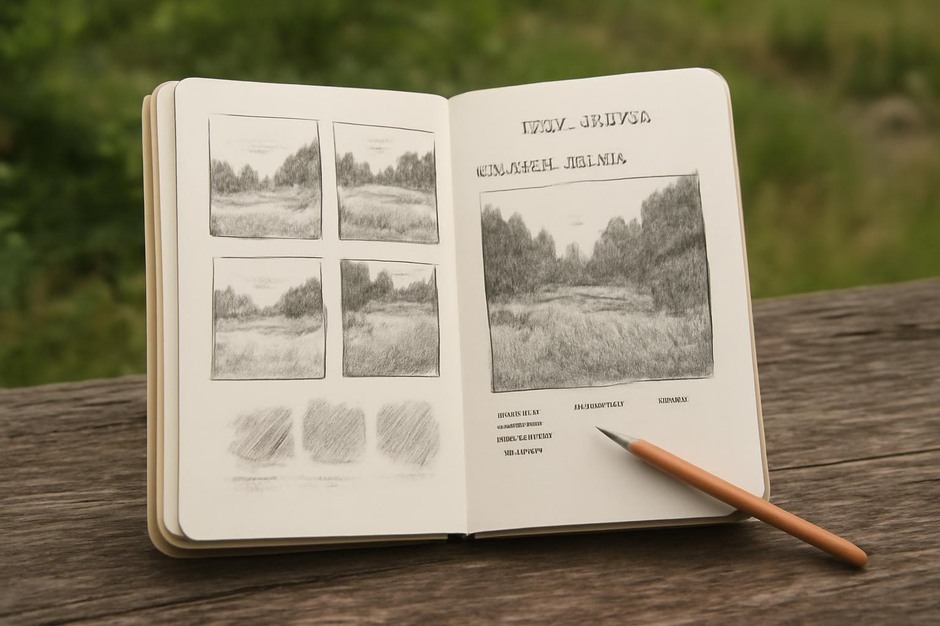
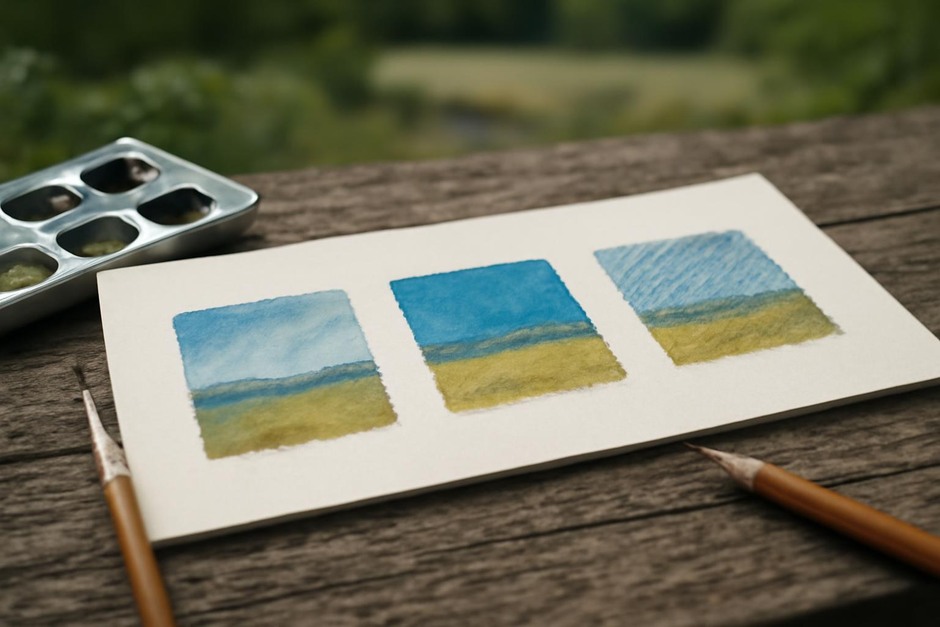
Each sequence privileges different qualities: transparency, correction, or texture. Test them on small squares to see how your chosen paper and pigments interact.
Surface choice and scale
Paper tooth influences layering. Smooth paper suits detailed dry-media overpainting and gouache finishes; textured paper accepts heavier washes and enhances tactile marks. For outdoor work, a 190–300 gsm paper balances durability and portability. Smaller formats encourage decisive layers; larger sheets allow more modulation but require longer drying and handling time.
Practical considerations for time and weather
If conditions are brief or damp, favour a quick wash and dry media accents. If you expect to work longer, you can build more translucent layers. Keep a blotter or absorbent cloth to test wetness before adding subsequent layers. For gouache, carry a small jar of water and a palette that keeps pigments moist but contained.
Exercises to compare approaches
- Pick a simple subject—stone, leaf cluster, small water patch—and execute three small studies, one with each approach.
- Keep the same paper and size to compare how layers read and photograph.
- Note time taken and how each process affected your observation: did it make you look more closely, or did it slow you down?
Layering media is a practical negotiation between material behavior and observational intent. Transparent washes invite patience and planning; gouache offers control and correction; dry media reward immediacy and texture. Each has its place in an outdoor sketchbook and adapting sequences to conditions is part of building a dependable practice.